
The Blind Spot in Autism Diagnosis
Why Autism in Women and Girls Is Still Being Missed
By: Matt Christian, LCSW, LSATP
This is a scenario I’ve seen several times:
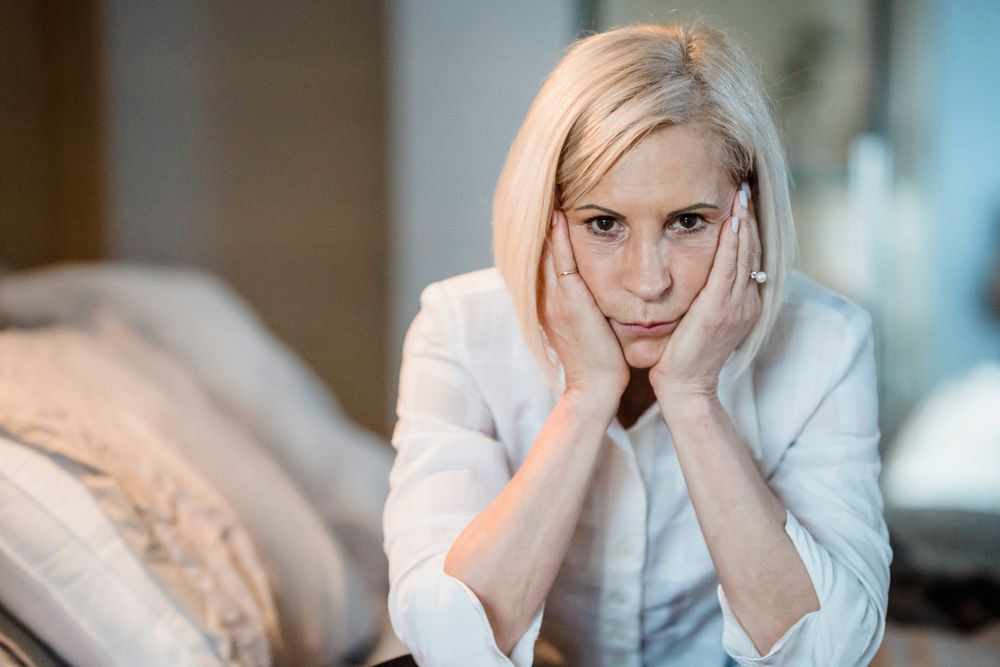
A woman in her late thirties comes into my therapy office. She is very polite. She sits on the couch and begins nervously fidgeting with her hair. She explains that she’s been treated for anxiety for the past ten years. One therapist suggested borderline personality disorder. She has a successful career, close friendships maintained through enormous effort, and a baseline level of stress that her family tells her is out of proportion. She’s autistic and she is only finding out now. This is not a rare story. A growing body of evidence suggests it is closer to the norm.
The Numbers Don’t Add Up
Autism is diagnosed in males at roughly four times the rate it is diagnosed in females — the well-known 4:1 ratio. [1] That figure has long been treated as a straightforward biological fact. It likely isn’t.
When researchers screen general populations (rather than counting people already referred for diagnosis), the ratio consistently narrows to around 2:1 or 3:1. A 2017 meta-analysis of 54 studies covering nearly 14 million people found the true ratio is likely closer to 3:1, with evidence that girls who genuinely meet diagnostic criteria are at disproportionate risk of not receiving a clinical diagnosis.[2] Female autism diagnoses have also been rising faster than male diagnoses for two decades. The rise likely isn’t caused by there being more autistic women, but because there is a growing awareness of how autism is missed in women and girls.[1]
Females Present Differently
The Cruz et al. (2024) meta-analysis, synthesizing 67 studies on gender differences in autism, found a striking divergence: on clinician-administered measures, males appeared more severely affected. But on caregiver and parent reports in everyday settings, females often appeared more impaired. The testing office and the living room were telling different stories.
So, what’s going on? One reason may be that autistic women tend to score significantly higher on camouflaging measures than autistic men. [1] Camouflaging refers to the suppressing of autistic traits to appear neurotypical. This can look like inhibiting stimming, forcing eye contact, rehearsing conversations, scripting social responses, or studying others’ expressions analytically. This can not only contribute to a missed diagnosis but comes at a cost over time.
The clinician sees someone who makes eye contact and initiates conversation.
The parent sees someone who comes home and falls apart.
The long-term cost of camouflaging is not trivial. Research consistently links it to elevated anxiety, depression, and autistic burnout. [10] What prevents diagnosis is also, quietly, what harms.
The Problem With Our Tools
The ADOS-2 (Autism Diagnostic Observation Schedule) is one of the most widely used tools in autism assessment, but it was developed mostly on male samples. [3] Research suggests autistic females are often less likely to show the specific outward features it is designed to pick up. When researchers control for overall autism severity, those sex differences disappear. [5] Not less autistic — just less likely to fit the pattern the tool expects.
An MIT study showed the impact. When ADOS-2 scores were required for research eligibility, the male-to-female ratio was 8:1. When researchers accepted community diagnosis instead, it dropped to about 2:1. [3] In this case, “community diagnosis” means a diagnosis already made in ordinary clinical practice, based on the full history and clinical picture rather than a single cutoff. So, the issue may be less about the tool being obviously biased and more about what happens when it is used as a strict gatekeeper.
That fits with another finding: item-level sex bias on the ADOS-2 actually appears to be small.[4] The larger problem may be the pipeline around it: who gets recognized, referred, and fully evaluated, in the first place.
Tools That Can Help
Several instruments have been developed specifically to address the gaps in male-normed assessment batteries:
- CAT-Q (Camouflaging Autistic Traits Questionnaire): A validated measure of social masking, with three subscales — Masking, Compensation, and Assimilation — that assesses strategies people may use to manage or conceal autistic traits. However, the measure is not meant to diagnose autism, high scores can also reflect anxiety or trauma, so the full clinical context is essential.
- GQ-ASC (Girls Questionnaire for Autism Spectrum Conditions): Designed specifically around the female phenotype. A validation study with 672 women found it correctly identified 80% of autistic women at a cutoff score of 57.[7] Covers childhood play quality, sensory sensitivities, social effort, and camouflaging.
Is the Gap Biological, or a Diagnostic Artifact?
Both, most likely. One idea that researchers study is called the “female protective effect.” This refers to evidence that girls and women may, on average, need a stronger underlying predisposition before autism becomes obvious enough to meet diagnostic criteria. That suggests biology may explain part of the sex difference. Even if true, it probably does not explain the whole gap, because autism in females is also more likely to be missed, misunderstood, or diagnosed later.
There is also Baron-Cohen’s “extreme male brain” theory, which frames autism as a hypermasculine cognitive profile.[9] However, this is contested and largely reflects cultural gender stereotypes as much as neuroscience. Brain imaging studies directly testing the theory have found only minimal support, with differences largely accounted for by overall brain size rather than cognitive organization.[9] Its legacy may have made it harder for clinicians to recognize autism in female patients.
Why does this matter?
The average autistic woman engages with mental health services for the first time roughly a decade before receiving an autism diagnosis,[11] spending those years accumulating labels that don’t quite fit: borderline personality disorder, anxiety, OCD, PTSD, eating disorders.[10]
I met with a woman who believed that no one else in the world was doing the type of elaborate masking that she was engaging in. She was initially surprised when I suggested that autism may be the correct diagnosis (though she later expressed that she had suspected it when she was younger). When I read her quotes from autistic women talking about their experiences of chronic masking, a surprised smile came to her face. She couldn’t believe she wasn’t alone.
Missed diagnoses aren’t just statistics, they have real impact on people’s lives. Some go decades receiving treatment that was never going to work for them. Parents, siblings, and spouses may miss the opportunity to best support their loved one. People can spend their whole lives believing there is something wrong or bad about them. Not realizing that they aren’t a defective neurotypical, they are a perfectly normal autistic person.
References
1. Cruz, S., Vasconcelos, M., & Sampaio, A. (2024). Is there a bias towards males in the diagnosis of autism? A systematic review and meta-analysis. Neuropsychology Review, 35, 153–176.
2. Loomes, R., Hull, L., & Mandy, W. P. L. (2017). What is the male-to-female ratio in autism spectrum disorder? A systematic review and meta-analysis. Journal of the American Academy of Child & Adolescent Psychiatry, 56(6), 466–474.
3. D’Mello, A. M., Frosch, I. R., Li, C., Cardinaux, A., & Gabrieli, J. D. E. (2022). Exclusion of females in autism research: Empirical evidence for a ‘leaky’ recruitment-to-research pipeline. Autism Research, 15(10), 1929–1940.
4. Kalb, L. G., Mazurek, M. O., Farmer, C., & Wodka, E. L. (2022). Analysis of race and sex bias in the Autism Diagnostic Observation Schedule (ADOS-2). JAMA Network Open, 5(4), e226859.
5. Rea, H. M., Øien, R. A., Shic, F., Webb, S. J., & Ratto, A. B. (2023). Sex differences on the ADOS-2. Journal of Autism and Developmental Disorders, 53(7), 2878–2890.
6. Hull, L., Mandy, W., Lai, M.-C., Baron-Cohen, S., Allison, C., Smith, P., & Petrides, K. V. (2019). Development and validation of the Camouflaging Autistic Traits Questionnaire (CAT-Q). Journal of Autism and Developmental Disorders, 49(3), 819–833.
7. Brown, C. M., Attwood, T., Garnett, M., & Stokes, M. A. (2020). Am I autistic? Utility of the Girls Questionnaire for Autism Spectrum Condition as an autism assessment in adult women. Autism in Adulthood, 2(3), 216–226.
8. Robinson, E. B., Rao, A., Manhart, L., IPP Team, & Smoller, J. W. (2022). The female protective effect against autism spectrum disorder. Cell Genomics, 2(6), 100134.
9. Baron-Cohen, S. (2002). The extreme male brain theory of autism. Trends in Cognitive Sciences, 6(6), 248–254. [For critique, see: Grisdale, E., Loe, B. S., Thiebaut de Schotten, M., & Dell’Acqua, F. (2021). Testing the extreme male brain hypothesis: Is autism spectrum disorder associated with a more male-typical brain? Human Brain Mapping, 42(15), 4882–4896.]
10. Bargiela, S., Steward, R., & Mandy, W. (2016). The experiences of late-diagnosed women with autism spectrum conditions: An investigation of the female autism phenotype. Journal of Autism and Developmental Disorders, 46(10), 3281–3294.
11. Fusar-Poli, L., Ciancio, A., Garg, K., Meo, V., Aguglia, E., & Petralia, A. (2021). Gender differences in misdiagnosis and delayed diagnosis among adults with autism spectrum disorder with no language or intellectual disability. Frontiers in Psychiatry, 12, 1–8.